
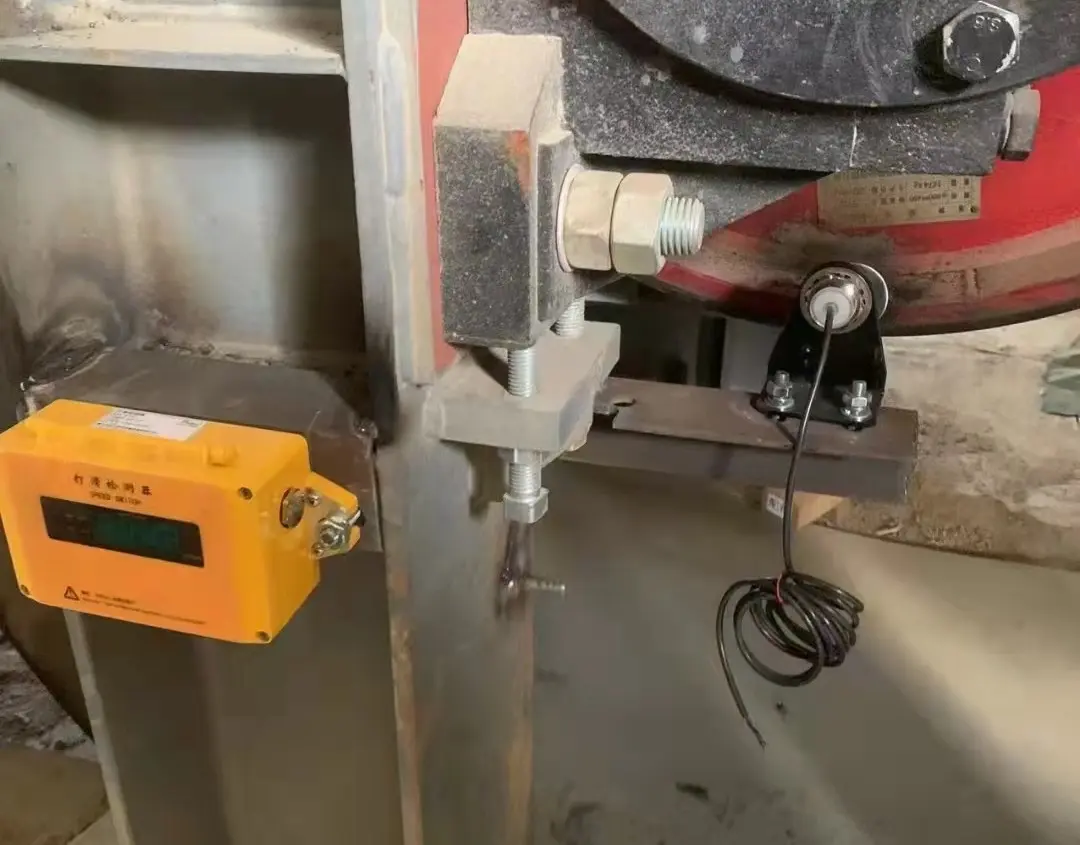
Chapter 1: Hazards of Belt Slippage on Belt Conveyors and the Need for Slip Detection
In modern bulk material handling industries such as mining, power generation, metallurgy, ports and building materials, the belt conveyor is the core backbone equipment for continuous, efficient, long-distance material transport. However, because conveyors operate for long periods under heavy load, in open air or in dust-laden environments, relative sliding between the drive pulley and the conveyor belt — commonly known as belt slippage — easily occurs due to excessive load, insufficient tension, rain, snow, moisture or material build-up.
Once belt slippage occurs and the automatic control system fails to detect it in time and cut off the power supply, the high-speed friction between the drive pulley and the belt instantly generates enormous heat: in mild cases the rubber surface of the belt is severely scorched, worn or even torn, while in severe cases frictional open flames are ignited, resulting in major fire and production safety accidents. Therefore, equipping the belt conveyor drive system with a highly sensitive and reliable belt slip detector (Belt Slip Detector / Conveyor Slip Switch) that continuously monitors the linear speed synchronization between belt and pulley has become a mandatory requirement of modern industrial safety standardization.
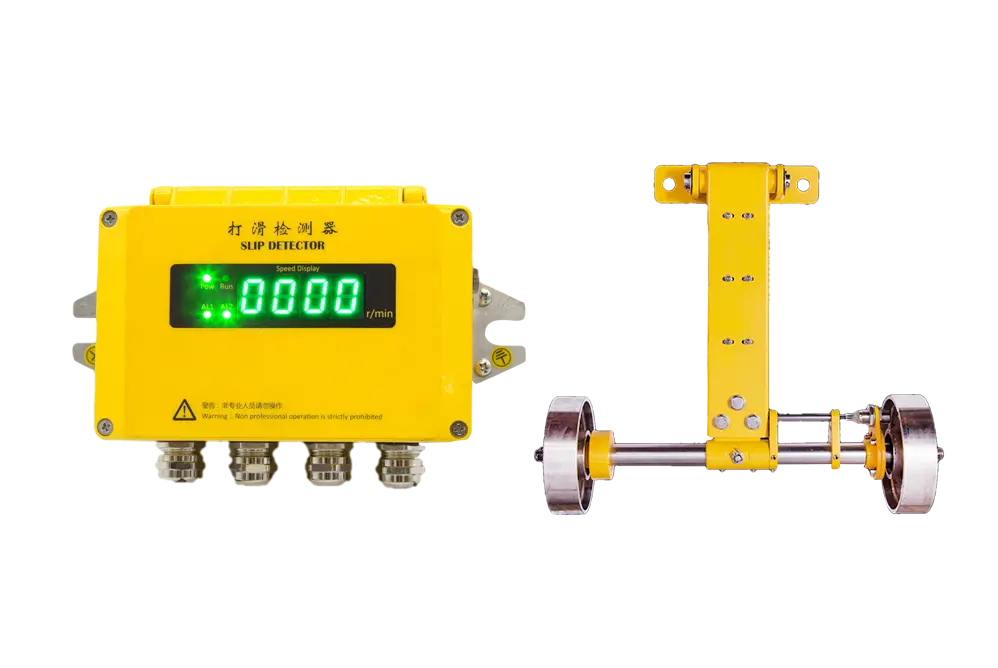
The XLDH-T-S split type belt slip detector is a high-performance speed monitoring device designed precisely to solve this industrial pain point. With its unique "split type" structural design and precise pulse signal comparison mechanism, it can issue alarm and interlocked shutdown signals rapidly at the earliest stage of slippage, safeguarding continuous production.
Chapter 2: Working Principle and Structural Advantages of the XLDH-T-S Split Type Belt Slip Detector
2.1 Speed Comparison and Pulse Monitoring Working Principle
The XLDH-T-S split type belt slip detector mainly consists of a sensor probe (the main detecting element) and a matching speed measuring wheel (or follow-up detection mechanism). Its core working principle is based on precise pulse comparison of rotational linear speed:
- Synchronized running state: when the conveyor runs normally, the follow-up speed measuring wheel is pressed tightly against the surface of the conveyor belt (or the driven/drive pulley) and rotates synchronously with the belt movement. The built-in high-precision sensor continuously acquires the rotational speed pulse signal of the measuring wheel.
- Abnormal slip state: when the drive pulley slips while the conveyor belt decelerates or stalls, the rotational speed of the measuring wheel changes abruptly or falls below the set synchronization threshold. The microprocessor inside the detector analyzes and compares the pulse signals; as soon as the speed difference exceeds the safe setting range, it triggers the internal control circuit.
- Output and interlock control: the device outputs switching signals (such as NO/NC contact signals) that connect directly to a PLC or control cabinet, cutting off the main motor power supply in an interlocked manner and starting audible and visual alarms, effectively preventing friction heat and belt tearing accidents.
2.2 Core Advantages of the "Split Type" Structural Design
Compared with traditional integrated slip switches, the split type design adopted by the XLDH-T-S delivers significant engineering advantages:
- High installation flexibility: the detection probe and the control box/signal processing part are physically separated; the sensor probe can be installed directly on the narrow or strongly vibrating belt return section or beside the driven pulley, while the electrical control box or junction box can be placed in a safe area convenient for inspection.
- Strong vibration resistance and environmental adaptability: because the mechanical fatigue of a heavy integrated structure under high-frequency conveyor vibration is reduced, the split type probe is lighter and more sensitive, greatly lowering mechanical wear and false alarm rates.
- Convenient maintenance: for routine inspection or parameter adjustment, there is no need to dismantle the entire complex mechanical structure, reducing the labour intensity of maintenance personnel and downtime.
Chapter 3: XLDH-T-S Core Technical Parameters and Performance Specifications
To help engineering and technical personnel achieve precise matching during design and selection, the table below lists the main technical specifications of the XLDH-T-S split type belt slip detector:
| Technical Parameter | Specification and Performance Description |
|---|---|
| Product Model | XLDH-T-S Split Type Belt Slip Detector |
| Working Voltage | AC 220V / DC 24V (compatible with conventional industrial power supplies) |
| Output Mode | Independent normally open and normally closed contact outputs (SPDT dry contacts) |
| Contact Rating | AC 250V / 5A, DC 30V / 5A |
| Detection Speed Range | 0.1 m/s – 9.9 m/s (wide adjustable speed ratio range) |
| Protection Rating | IP65 / IP67 (excellent dust-proof, waterproof and outdoor weather resistance) |
| Ambient Temperature | -30°C to +70°C |
| Relative Humidity | ≤ 95% RH (non-condensing) |
| Response Time | < 0.5 s fast response |
| Applicable Media | Coal, ore, power, port bulk cargo and other belt conveyor systems |
3.1 Outstanding Performance
- Strong anti-interference capability: the circuit system adopts multi-stage filtering and optoelectronic isolation, effectively shielding electromagnetic interference from on-site frequency converters and high-power motors.
- Stable operation over a wide temperature range: high-quality components and a special sealant potting process enable long-term stable operation both in cold northern open-pit mines and in hot, humid southern ports.
Chapter 4: On-site Installation, Commissioning and Maintenance Rules for the Split Type Belt Slip Detector
4.1 Mechanical and Electrical Installation Steps
- Selection of installation position: it is usually recommended to install the speed measuring wheel on the non-working surface of the belt return section (or near the driven pulley), ensuring smooth belt running without serious misalignment.
- Probe fixing and contact pressure adjustment: weld or bolt the split type sensor probe and the follow-up wheel bracket firmly onto the frame. Adjust the spring or adjusting nut so that the measuring wheel maintains moderate and uniform contact pressure against the belt surface — it must neither slip nor be over-pressed, which would aggravate wear.
- Electrical wiring: check the power cable and the output control cable strictly according to the equipment wiring diagram, and ensure the shielded cable is well grounded to prevent stray signal interference.
4.2 Key Points of Commissioning and Daily Maintenance
- Initial speed calibration: with the belt running at normal full speed without load, adjust the reference speed potentiometer of the detector so that the system memorizes and locks the normal running pulse frequency.
- Simulated slip test: manually lift or block the speed measuring wheel gently to simulate a deceleration state, and check whether the output contact operates reliably within the set time and triggers the shutdown interlock.
- Regular inspection and cleaning: regularly clean attachments on the surface of the measuring wheel (such as sticky coal, mud, frost and so on) and check whether the shaft rotates freely and whether cable joints are loose.
Chapter 5: Summary and Outlook for Industrial Applications
As an indispensable safety interlock monitoring device for modern belt conveyor systems, the XLDH-T-S split type belt slip detector builds a solid equipment safety defence line for enterprises with its scientific split structure, high-precision pulse monitoring and rugged industrial protection.
In the wave of industrial automation and intelligent transformation, correct selection, standardized installation and regular maintenance of slip detection equipment can not only effectively eliminate the hidden dangers of fire and belt tearing caused by belt slippage, but also greatly reduce unplanned downtime losses, achieving efficient, safe and green operation of bulk material conveying systems.