
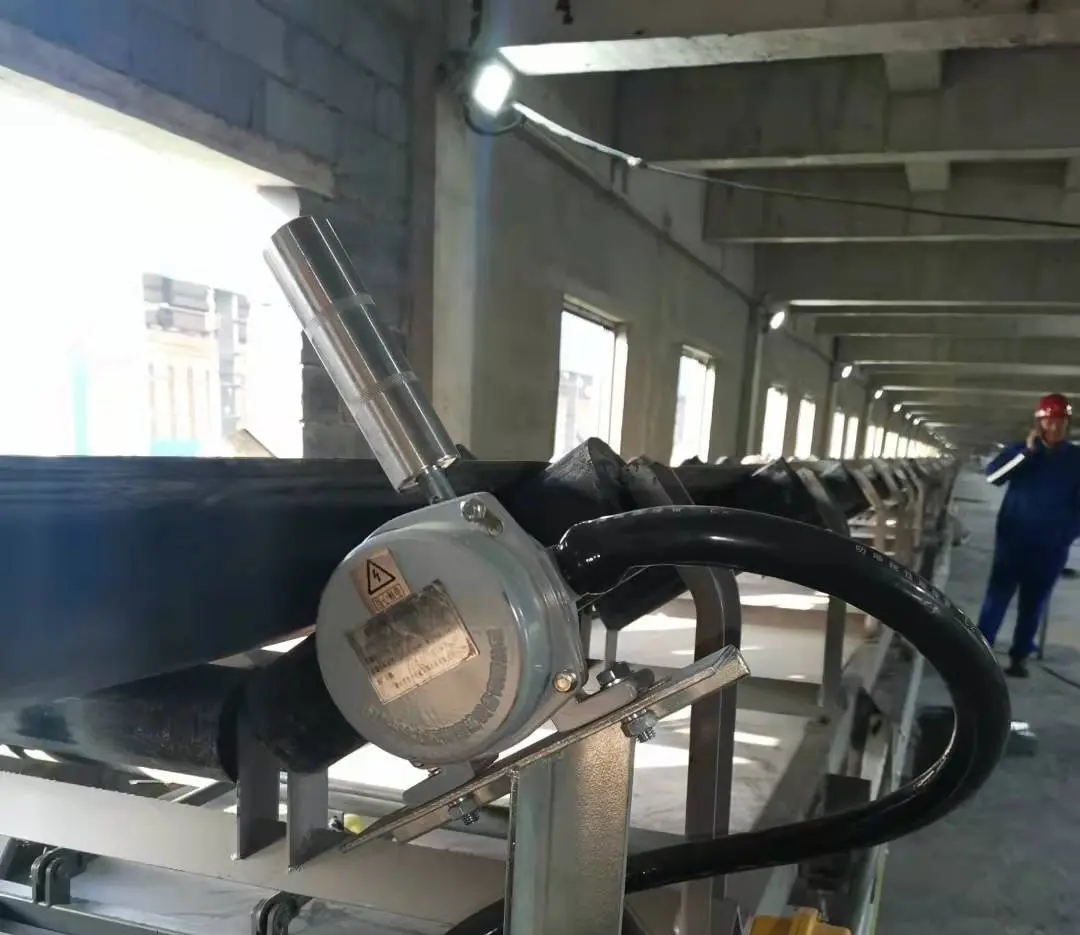
Chapter 1: Belt Deviation Hazards in Bulk Material Handling and Flammable & Explosive Environments
In heavy industries such as underground coal mining, surface coal preparation plants, coal handling systems of thermal power plants, chemical raw material storage and port bulk cargo terminals, belt conveyors are the main artery for the continuous and efficient transport of bulk materials. However, because conveyors are typically characterized by long transport distances and heavy loads, and because of factors such as uneven material loading, material build-up on pulleys, stiff idler rotation or misaligned splices, the belt very easily drifts laterally during operation — the phenomenon known as "belt deviation".
In ordinary industrial environments, severe belt deviation causes the belt edge to rub violently against the frame, tearing the belt and spilling material. In hazardous locations such as underground coal mines or chemical plants where explosive gases (methane, dust, etc.) are present, the intense frictional heat and even sparks generated by deviation can easily ignite the explosive atmosphere, causing extremely severe accidents with mass casualties.
To eliminate this safety hazard at its root, national safety standards mandate that belt conveyors in special explosion-proof zones must be equipped with a highly reliable explosion-proof two-stage belt deviation switch (Explosion-proof Two-stage Belt Deviation Switch). Such a device delivers a "warning" at the early stage of belt deviation and an "emergency shutdown" at severe deviation, forming a solid lifeline that protects flammable and explosive conveying lines.
Chapter 2: Working Principle and Dual-Stage Trigger Mechanism of the Explosion-proof Two-stage Belt Deviation Switch
2.1 Unique Explosion-proof Construction and Mechanical Actuation Principle
The explosion-proof two-stage belt deviation switch adopts an overall special explosion-proof housing design featuring high strength, airtightness and corrosion resistance, with precise mechanical transmission and micro-switch contacts integrated inside. Its core operation is based on the principle of a vertical roller deflected under pressure:
- Normal operating state: when the conveyor belt runs steadily and centred, the belt edge does not contact the vertical roller of the switch, and the switch remains in its normally static position.
- Slight deviation (first-stage alarm): when the belt shifts by a certain amount, the belt edge presses the vertical roller, causing it to rotate and deflect outwards to the preset first-stage angle (usually around 10° or 12°). The first-stage contact inside the switch actuates and outputs an audible and visual alarm signal, alerting the operator on duty or triggering an automatic belt-correction device through interlocking.
- Severe deviation (second-stage shutdown): if the deviation is not corrected and keeps worsening, the vertical roller continues deflecting outwards until it reaches the preset second-stage angle (usually around 30° or 35°). The second-stage contact actuates instantly and directly outputs an interlock shutdown signal that cuts off the main motor power of the conveyor, preventing belt tearing and friction-induced fires.
2.2 Explosion-proof and Sealing Advantages
- Flameproof / increased-safety housing: excellent flameproof performance completely isolates any electric sparks generated inside from the external explosive atmosphere.
- High degree of protection: the enclosure surface receives advanced powder coating and anti-corrosion treatment, which, combined with high-quality sealing gaskets, delivers outstanding water, dust and corrosion resistance.
Chapter 3: Core Technical Parameters and Performance Advantages
To help electrical engineers and procurement teams make accurate selections when engineering explosion-proof areas, the table below summarises the core technical parameters of the explosion-proof two-stage belt deviation switch:
| Technical Parameter | Specification & Performance Description |
|---|---|
| Product Type | Explosion-proof Two-stage Belt Deviation Switch |
| Ambient Temperature | -20°C to +50°C |
| Relative Humidity | 0% – 95% RH |
| Atmospheric Pressure | 80 kPa – 110 kPa |
| Contact Form & Quantity | Multiple independent SPDT (single-pole double-throw) NO/NC contacts |
| Contact Rated Capacity | AC 380V / 3A, DC 24V / 3A |
| Actuation Angle Settings | First-stage alarm angle (typically 10°–12°), second-stage shutdown angle (typically 30°–35°) |
| Reset Mode | Automatic Reset |
| Applicable Cable Diameter | 6 mm – 10 mm diameter incoming cable |
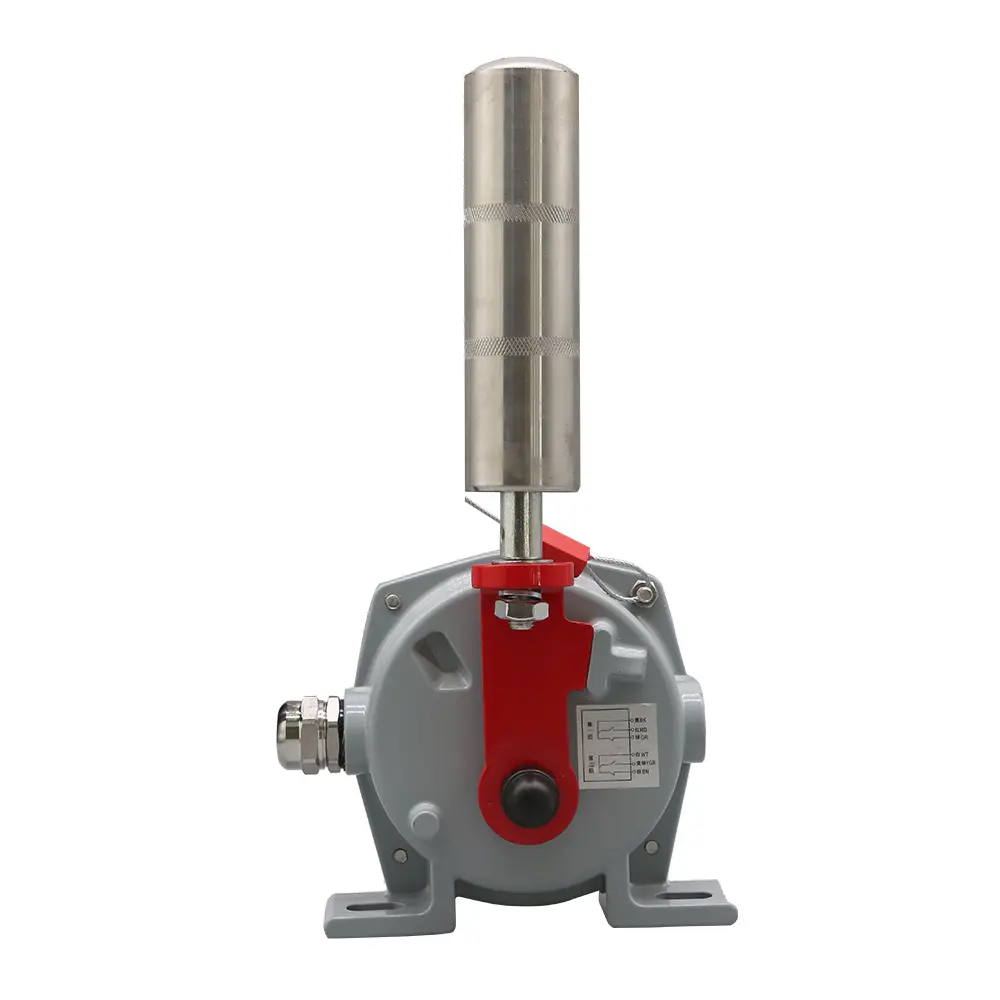
3.1 Core Performance Advantages
- Dual protection mechanism: it combines "warning" and "shutdown" in a single device, avoiding the production efficiency loss caused by conventional single-stage switches that "trip immediately on any deviation", and giving the system a buffer for correction.
- Safety and compliance assurance: fully compliant with industrial explosion-proof safety standards and especially suitable for high-risk enclosed workplaces such as underground coal mines.
Chapter 4: On-site Installation Specifications and Commissioning Points
4.1 Installation Position and Quantity Configuration
- Installation position selection: deviation switches should be installed in symmetric pairs at the head and tail of the conveyor, along straight intermediate sections, and before and after heavy-load material transfer points. They are usually mounted above the frames on both sides of the belt so that the roller centre keeps a reasonable height and horizontal clearance relative to the belt edge.
- Configuration spacing: on standard conveyors, one set of deviation switches is generally installed every 30 to 50 metres; the layout should be densified appropriately at tension sections and inclined sections.
4.2 Mechanical Fixing and Commissioning Steps
- Welding or bolted fixing: firmly weld or high-strength bolt the dedicated mounting bracket of the deviation switch onto the conveyor longitudinal beam, ensuring that it does not shift due to frame vibration during operation.
- Roller alignment: adjust the distance between the vertical roller and the belt edge so that they do not touch within the normal belt runout range, while the roller can still be pushed smoothly once the deviation reaches the warning line.
- Two-stage actuation verification: manually push the vertical roller outwards to trigger the first-stage alarm and second-stage shutdown angles in turn, and verify that the signal response of the PLC/DCS system in the control room is accurate.
Chapter 5: Electrical Wiring, Safety Precautions and Daily Maintenance Guide
5.1 Electrical Wiring and Safety Warnings
- Live working strictly prohibited: under no circumstances may the explosion-proof enclosure be opened for wiring or servicing while energised, to avoid sparks that could cause a safety accident.
- Cable entry and sealing: armoured cables or dedicated rubber-sheathed cables meeting explosion-proof requirements must be used; the cable outer diameter must perfectly match the sealing ring specification (applicable diameter 6–10 mm), and the compression nut must be fully tightened to guarantee the airtightness of the flameproof joint surface.
- Wiring verification: according to the internal terminal numbering, connect the first-stage alarm contact and the second-stage shutdown contact to their respective control circuits.
5.2 Daily Inspection and Maintenance Specifications
- Regular dust cleaning: regularly clean accumulated coal and dust from the explosion-proof enclosure surface and around the vertical roller to prevent debris from jamming the mechanical transmission shaft.
- Rotation flexibility check: check whether the roller bearing rotates freely and whether there is jamming, lack of lubricant or severe wear.
- Explosion-proof surface and seal inspection: periodically check the flameproof joint surfaces for scratches and corrosion, and the sealing rings for aging or deterioration, ensuring long-term reliable explosion-proof performance.